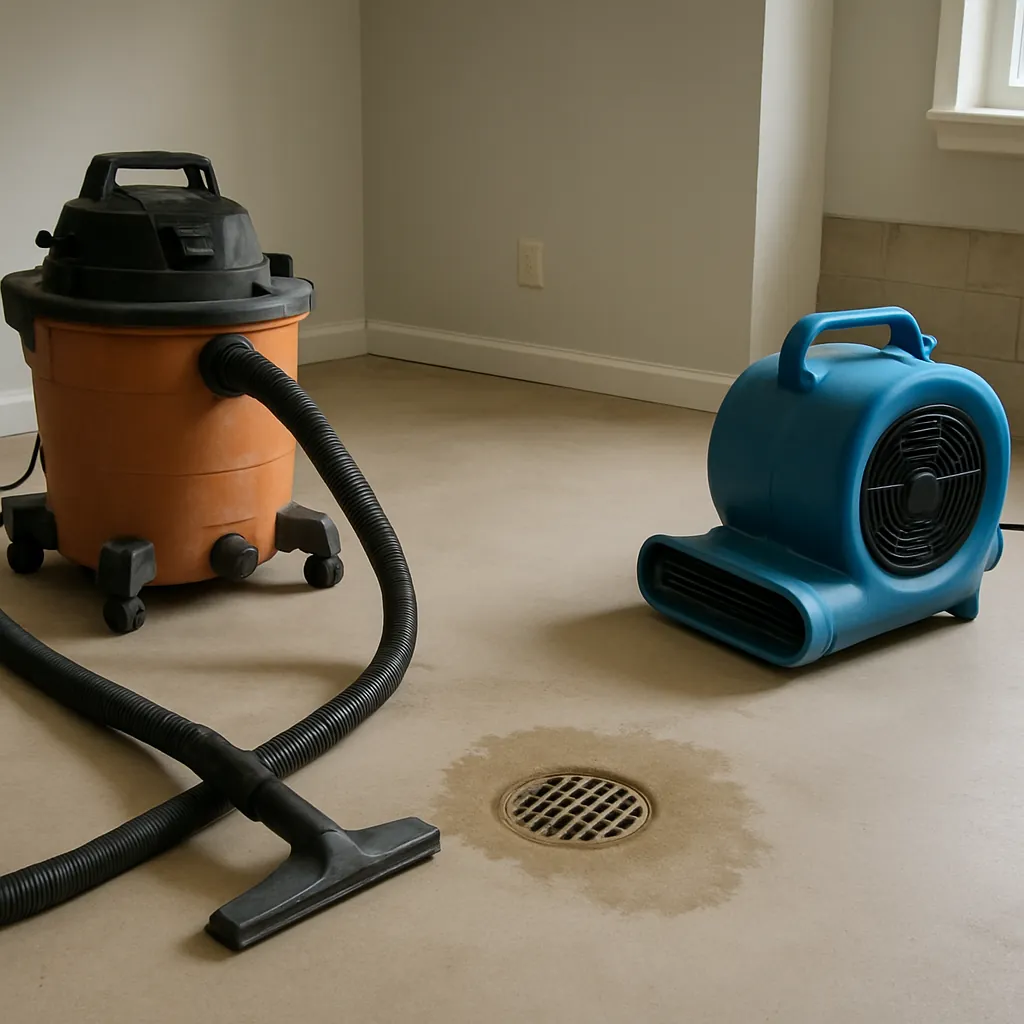
New City Trenchless explains why sewer backup repair is a diagnosis problem before it is a plumbing problem. A backup in a New City basement can come from a grease blockage, a root mat, a bellied pipe or a surcharged municipal main, and clearing the line without learning which one is why backups repeat.
What the Backup Itself Tells You
Sewage seeks the lowest opening, so the basement floor drain or a basement toilet backs up first while upstairs fixtures run fine. That pattern points at the lateral. One slow or overflowing fixture with everything else normal points at a branch line instead.
Timing matters as much as location. A line that behaves in dry weather and backs up during storms is describing infiltration or a surcharged sewer main, not a blockage. Gurgling traps are the early warning that air is being displaced past a partial obstruction.
Many older Rockland homes also have a house trap buried near the foundation. A house trap that clogs repeatedly is its own diagnosis, and often its own repair.
The house itself narrows the list further. A split-level with a bath on the lower slab, a finished basement with a laundry below grade, or a floor drain set only an inch under the surrounding slab all put fixtures close to the hydraulic grade line, which is why two houses on the same street can share a lateral problem and only one of them ever sees it on the floor.
The Four Failures Behind Most Backups Here
Grease and scale
Kitchen grease cools and coats the pipe wall. In cast iron pipe, scale buildup narrows the bore at the same time, until an ordinary flush hangs up on the rough wall. Wipes labeled flushable do not break apart like paper, and they bind to a greased or scaled wall instead of passing it, which is how a slow drain becomes a solid plug in a week.
Root intrusion
Roots enter at weeping vitrified clay joints and build mats that strain solids out of the flow. Mature street trees planted with the postwar subdivisions are now large enough to send roots the full depth of a lateral, and the joint they find is the one already leaking a little water. We cover cutting, jetting and sealing in depth on the tree root removal page.
Bellied or collapsed pipe
Where trench soil settled, the pipe lost its fall and a low spot holds standing water. Solids drop out there every day until the belly blocks. Orangeburg pipe fails further: the fiber wall softens and squeezes out of round until the line closes entirely.
The municipal main
Heavy rain can surcharge a district main, and the overloaded main pushes flow back up private laterals. No amount of cleaning on your side fixes that. A backwater valve installed on the lateral is the defense, and the district side of the boundary sits with Rockland County rather than with you.
The First Hours
Your job is simple: stop putting water into the drains. The dishwasher, the laundry, the upstairs shower all end up on the basement floor until the line is open. Keep people and pets off the wet floor, and cut power to any circuit with outlets or equipment near standing water at the panel rather than by reaching for a switch in the room.
The safer sequence is fixed. Relieve the line at the cleanout so it drains outside instead of inside. Clear the blockage with a drain auger or hydro jetter, then run a CCTV sewer inspection while the walls are freshly cleaned. A backup visit that ends without camera footage leaves the cause unresolved. Active overflow that will not relieve at the cleanout is emergency work, not a scheduled visit.
Rain-Driven Backups: Infiltration, Inflow and the High Water Table
A backup that only happens in weather is a hydraulic problem, not a clog. Infiltration is groundwater seeping into the pipe through cracked barrels and open joints. Inflow is stormwater entering directly, through a broken cleanout cap in the lawn, an uncapped vent, or a sump pump or downspout tied into the sanitary lateral, which is a connection most municipalities prohibit for exactly this reason. Both fill the system with clean water on the day it has the least room for it.
Rockland’s geography makes this local rather than theoretical. The low river villages sit on a high water table where a lateral can be below groundwater for much of the year, and Piermont and its neighbors see tidal and flood influence. Storm-season preparation guidance from Ready.gov covers the property side; sewer leaks should be sealed based on what the camera finds rather than treated with repeated cleaning.
Backwater Valves and What They Trade Away
A mainline backwater valve is a normally-open flapper set in the lateral, usually inside an access box, that swings shut when flow tries to come back toward the house. It is the only real defense against a surcharged main.
The trade is worth understanding before installation. While the valve is closed against street flow, nothing in the house can drain either. It also needs an accessible cover and periodic cleaning. Adding a valve during planned replacement work may cost less than a separate excavation.
The Camera Pass After the Line Is Open
Clearing tells you the pipe flows today. The camera tells you what it will do next month, and the finding maps directly to a repair and a price.
| What the camera finds | The fix | Typical range |
|---|---|---|
| Grease or scale, sound pipe wall | Jetting and a maintenance interval | Cleaning only |
| One offset joint or single root entry | Sectional point repair | $1,500 to $4,000 |
| Roots at most joints, pipe still round | Full cured-in-place lining | $4,000 to $12,000 |
| Deformed Orangeburg or a collapse | Pipe bursting in new HDPE | $6,000 to $15,000 |
| Lateral intact, backflow from the main | Backwater valve, and footage for the district | Valve cost, plus district follow-up |
The inspection itself runs $250 to $500 and is often credited against the repair.
Where Cleanup Ends and Repair Begins
Sewage in a finished space is a remediation job: extraction, drying and disinfection belong to a separate trade, and an insurer may require documentation. Public health agencies including the New York State Department of Health publish cleanup guidance for this situation. The pipe repair should be sized to what the camera found.
Habits That Keep the Line Open
Grease goes in the trash, not the drain, including the pan you rinse with hot water and believe you got away with. Wipes, floss and cat litter go in the trash whatever the packaging claims. Houses with mature trees over the lateral do better on a scheduled jetting interval than on emergency calls, and a camera pass every few years on a 1945 to 1972 house is the cheapest way to find a failing lateral before it announces itself on the floor. In the dense older housing of Spring Valley and similar street grids, where laterals are short, shallow and crowded with tree roots, that interval is the difference between a maintenance line item and a flooded basement.
Frequently Asked Questions
Is a sewer backup an emergency?
If sewage is actively rising out of a drain, yes: stop all water use in the house and call. If the water came up once and drained back down, you have a warning instead of an emergency, but the line still needs a camera that week. Whatever pushed it up is still in the pipe.
Does homeowners insurance cover sewer backup repair?
Usually not by default. Most standard policies exclude backup damage unless a sewer or water backup endorsement was added, and the pipe repair itself is generally treated as maintenance rather than a covered loss. Check your declarations page, and keep the camera footage either way.
Who is responsible if the town main caused the backup?
In most Rockland municipalities the homeowner owns the lateral from the house to the main and the district owns the main itself. If a surcharged main pushed sewage back into your basement, that is the district's side of the line. Camera footage showing your lateral intact is the evidence that conversation runs on.
Will one cleaning fix a backup for good?
Only if the cause was a one-time blockage. Grease habits can be changed, but roots regrow, a bellied section keeps collecting solids, and a deformed Orangeburg line keeps closing. The camera after clearing is what tells you whether you are done or just reset the clock.
Should I install a backwater valve?
It is the right defense when the cause is a surcharged main rather than your own pipe, and it is worth adding during any excavation you are already paying for. It is not a substitute for repairing a failed lateral, and it needs an accessible cover so the flapper can be checked and cleaned.