New City Trenchless covers lining and bursting options for the clay tile and cast iron laterals under Haverstraw’s pre-1940 village blocks. The village that fired bricks for New York City sits on the same dense Hudson clay that fed its yards, and that clay is hard on buried pipe.
Sewer Laterals Under Haverstraw’s Village Blocks
Most housing between Broadway and the river went up before 1940, decades before plastic pipe existed. That leaves two lateral materials: vitrified clay laid in short mortared sections, and cast iron, often patched together where a past owner fixed one failure at a time. Runs are short because village lots are narrow, and access is tight for exactly the same reason.
Plenty of these houses have no outside cleanout at all, and some still drain through the original house trap at the foundation wall. Short runs cut cost. Tight access cuts options.
| Haverstraw housing | Typical era | Likely lateral | First thing we check |
|---|---|---|---|
| Village blocks off Broadway and Main | 1880s to 1930s | Clay tile, cast iron, or both | Whether there is any cleanout at all |
| Workers’ housing near the old yards | Late 1800s to 1920s | Clay tile on shallow bedding | Bellies and infiltration below the water line |
| Hillside infill above the village | 1950s to 1970s | Clay tile or bituminized fiber | Whether the fiber still holds its shape |
| Riverfront redevelopment on yard land | 1990s onward | Plastic | Settlement where new pipe meets old |
What Brickyard Clay Does to a Buried Pipe
Haverstraw’s clay was good enough to build an industry on. Brickyards once lined Haverstraw Bay, the widest reach of the Hudson, and the deposit runs deep. Under a lawn, that same plastic, water-holding clay swells when wet, shrinks when dry, and shifts lateral joints a little further every season. Soil scientists call it shrink-swell potential, and the USDA Natural Resources Conservation Service rates it as a limitation for buried utility lines for exactly this reason.
On camera that history reads as offset joints in clay tile, infiltration where groundwater pushes in through the openings, and bellied sections where trench backfill settled unevenly. Cast iron fares no better. Clay holds moisture against the pipe year round, feeding the corrosion that carves channeling along the invert and builds the scale that snags paper and grease.
Freeze-thaw compounds it. Rockland winters cycle the top few feet of soil repeatedly, and clay that holds water heaves harder on freezing than sand ever does.
The 1906 Landslide and the Ground It Left Behind
Mining the clay out from under the village had consequences. In January 1906 an undermined slope above the yards gave way in the night and took a row of houses and a number of lives with it, still one of the worst landslides in the state’s record. USGS landslide hazard work catalogs failures of that type, and the ground the event left behind is part of why the older slopes here are not a place to open a deep trench casually.
Cut and fill from a century of industry means the bedding under a Haverstraw lateral is not uniform from one property to the next. A run can pass out of undisturbed clay into old fill within thirty feet, and that transition is where the sag almost always appears.
Narrow Lots, No Cleanout and the House Trap
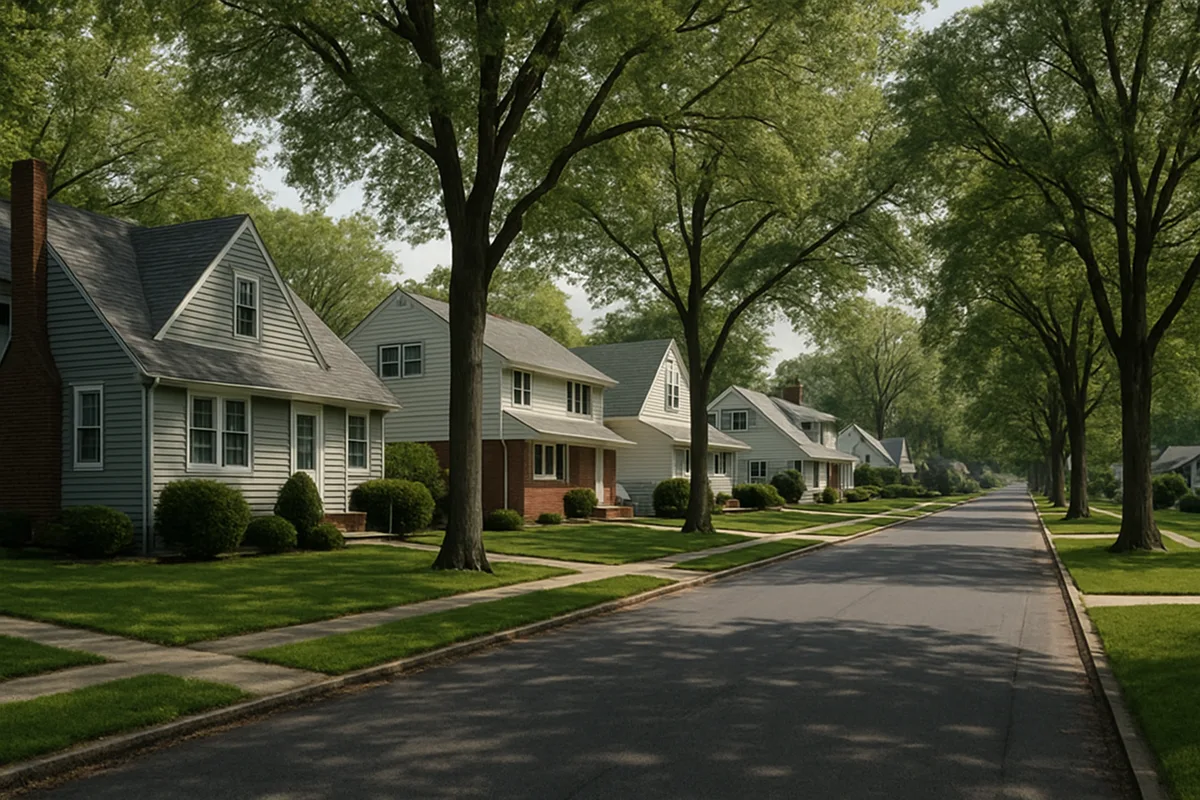
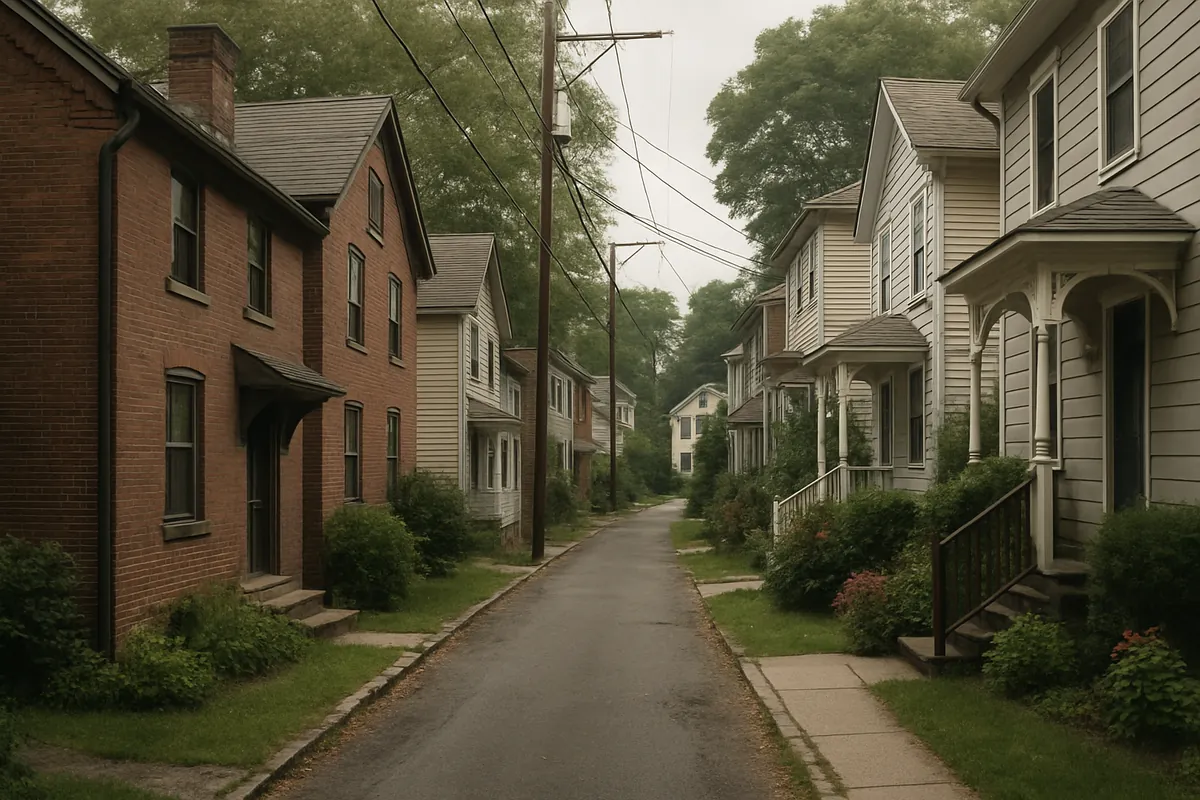
The village plat is tight. Houses sit close to the sidewalk, driveways are shared or absent, and there is frequently no way to get an excavator onto a lot without going through a neighbor’s property or occupying a parking lane for a week.
That is the practical argument for working from an access opening of a few square feet. A crew that can film through a basement cleanout, or open one compact pit and set a two-way cleanout while it is there, fixes a village lateral without touching the sidewalk, the street parking or the fence line. Where a house trap blocks the run, it usually comes out during the repair and the two-way cleanout replaces it permanently.
Worth knowing before you call anyone: the mains under the street are the municipal system’s to maintain, and Rockland County publishes the department contacts for that side of the line. The lateral from your house out to the tap is the homeowner’s, all the way to the connection, and in a village where the tap sits under pavement that distinction decides who pays.
Matching the Repair to a Pre-1940 Lateral
Cast iron: line it instead of digging it
Corroded cast iron with sound walls is a textbook host pipe for cast iron pipe lining. The pipe is descaled and hydro jetted back to bare metal, then an epoxy-saturated felt liner is cured in place inside it, giving the lateral a jointless new wall with no excavation on the lot.
Clay tile: spot repair or full liner
One failed joint takes a sectional point repair at $1,500 to $4,000. A tile run with offsets every few feet gets a full cured-in-place liner, typically $4,000 to $12,000 for a residential lateral. Pipe bursting with new HDPE, at $6,000 to $15,000, is the answer when the camera finds a collapsed section no liner can cross.
Open-cut on the same lateral commonly runs 1.5 to 2x the trenchless price here once sidewalk restoration and traffic control on a narrow street are counted.
Why Open-Cut Is the Wrong Tool in the Village
Trenchless work in Haverstraw runs from a cleanout or a single compact pit. Open-cut means an excavator on a narrow village lot beside parked cars, plus a sidewalk to restore wherever the trench crosses it, in clay that does not backfill cleanly once it has been disturbed.
A camera inspection, typically $250 to $500 and sometimes credited against a repair, shows which method fits before anyone opens the ground. On the low blocks near the bay, where groundwater sits close beneath the clay, keeping the trench closed also keeps water out of the work.
The same village pattern repeats north in Stony Point, where pre-1940 housing sits on comparable ground. South of here the picture flips: Congers and Valley Cottage are postwar tracts on lots with room to work, carrying fiber pipe rather than clay tile, which is a different diagnosis and often a different method.
Frequently Asked Questions
What pipe is under a pre-1940 Haverstraw house?
Almost always vitrified clay tile, cast iron, or a patchwork of both from decades of partial fixes. Plastic only appears where a section was already replaced. A camera inspection identifies the material within the first few feet.
Can you fix a sewer line without digging up the sidewalk?
Yes. Lining works through a basement cleanout or one small pit on the lot, so village sidewalks and on-street parking stay untouched. Where the lateral runs under pavement toward the main, the liner still reaches it from the house side.
My basement has an old house trap. Does it affect trenchless work?
It can. A house trap blocks camera and liner access from inside, so the crew works from an outside cleanout instead, or sets a two-way cleanout in a small pit. Many pre-1940 village homes have the trap and no cleanout, which the first visit sorts out before any repair is scheduled.
If the clay moves that much, will a new pipe just fail the same way?
Shrink-swell clay moves whatever is buried in it. The difference is joints. A clay tile lateral is a chain of short sections with a joint every few feet, so ground movement opens them one by one. Fused HDPE pulled in by bursting is one continuous length with no joints for the clay to work on, and a cured liner turns an existing run into the same thing.
My block is up the hill above the old brickyards. Does that change the job?
It can. Cut and fill from a century of clay mining means bedding under a hillside lateral is not uniform, so a run can pass from undisturbed clay into old fill within thirty feet. That transition is an important place to inspect for bellies on camera.