New City Trenchless covers trenchless sewer repair options for Piermont, where groundwater can sit only a few feet below grade. Between Tallman Mountain and the Hudson, on made ground beside a tidal marsh, this is one of Rockland County’s clearest cases for minimizing excavation.
A Village Built at River Level
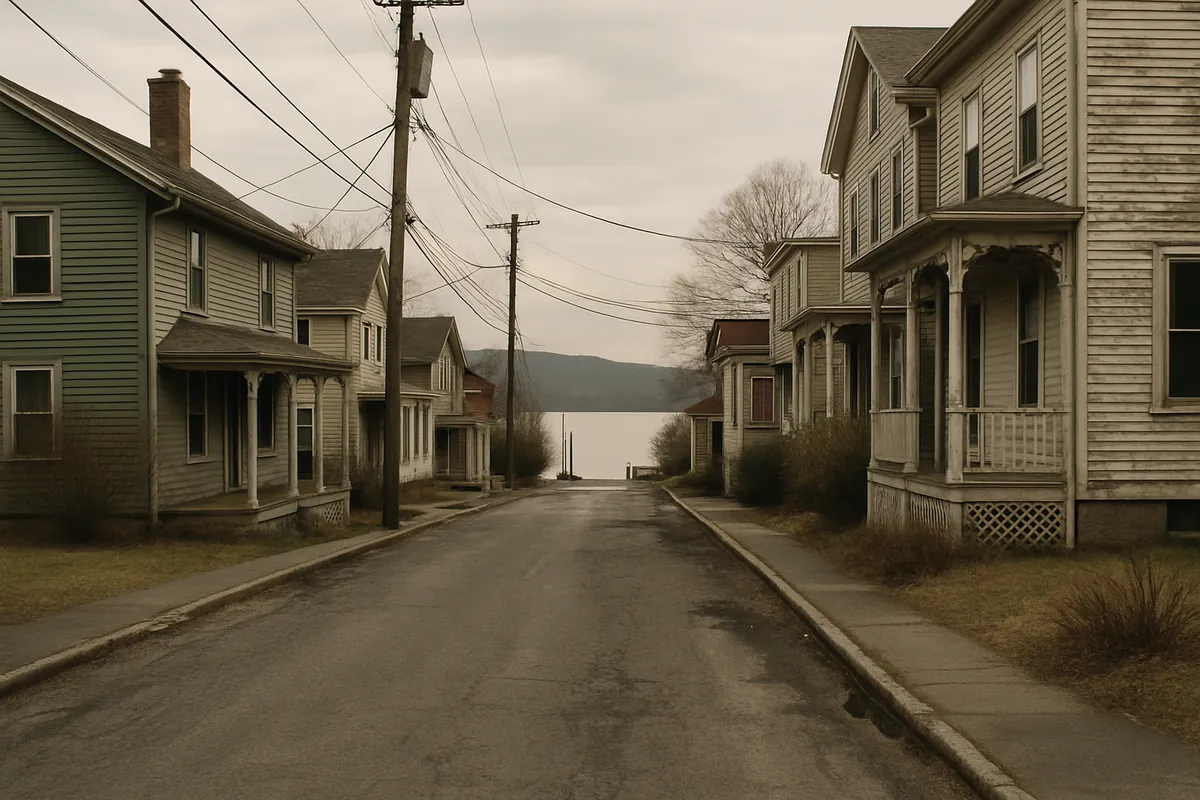
Piermont exists because of its mile-long pier, driven out into the Hudson in the late 1830s as the eastern terminus of the Erie Railroad. The village that grew around it, originally Tappan Slote and incorporated in 1850, sits barely above the water it juts into.
Sparkill Creek cuts through the center on its way to the river, running out through the Sparkill Gap, the one break in the Palisades ridge at anything like sea level. Piermont Marsh spreads south of the pier and is one of the protected reserve sites in the National Estuarine Research Reserve System. The low blocks along Piermont Avenue flooded hard during Sandy in 2012 and still take water on strong storm tides.
Under those streets, the water table is not a technicality. It sits a few feet down and it moves with the river, because the Hudson is tidal well past this point, which anyone can confirm against the NOAA tide and current record for the estuary.
Two Villages Stacked on Top of Each Other
Piermont is really two places, and a sewer lateral behaves differently in each one. Where your house sits determines the whole diagnosis.
| Where the house sits | Ground under the lateral | What goes wrong |
|---|---|---|
| Lower village, Piermont Avenue and the flats | Fill and marsh-edge silt, tidal water table | Infiltration at every joint, bellies, collapse in saturated ground |
| Riverfront and old mill land | Made ground over a century of industrial use | Uneven settlement, sagged runs, unpredictable bedding |
| Hillside above the village | Thin soil over Palisades diabase | Shallow bedding, steep grade, root intrusion at joints |
The flat blocks are a water problem. The hillside above them is a rock and grade problem. Neither is guesswork once the camera is in the line.
What Saturated Ground Does to a Sewer Lateral
High groundwater attacks a lateral from both sides. Below the water line, every cracked or offset joint admits water into the pipe, and that infiltration load runs down the public mains to the treatment works at public expense. Above it, the same defects leak sewage out into the soil as exfiltration, into ground that drains toward a tidal marsh.
The tidal cycle works joints loose over decades. The soft fill and silt this village stands on settle unevenly, leaving a bellied pipe holding standing water between two high spots. Solids drop out in the sag, the sag builds, and the worst cases finish as a collapsed pipe in ground too wet to dig by hand.
There is a diagnostic buried in that. Groundwater entering a defect can show on camera as flow that appears and fades on the tide cycle, revealing both a leak and its likely position relative to the water table. That observation can help decide between lining and bursting.
Why a Trench Is the Wrong Answer on the Flats
A trench below the water table needs continuous pumping and shored walls, and saturated silt slumps back in about as fast as it comes out. An open excavation in a street that sits inside a mapped flood hazard area, the kind published through FEMA’s flood map program, is a liability between tides rather than a work site.
Once dewatering, shoring and pavement restoration are counted, open-cut here typically lands at 1.5 to 2x the trenchless number. In most towns open-cut is merely the slower and messier option. In the lower village it is often not a real option at all.
Bursting Fused HDPE Below the Water Table
Pipe bursting is the wet-ground method of choice. The bursting head fractures the old host pipe outward while towing in HDPE fused into a single continuous run with no joints in it, so the finished lateral gives tidal groundwater nothing to enter. Where the old line has already collapsed in soft fill, bursting is also the only trenchless method that can re-establish a path through it, which is why full trenchless replacement comes up more often here than it does in the dry towns inland.
Lining works in Piermont too, with one adjustment. Groundwater keeps the host pipe cold, which slows an ambient epoxy cure, so a steam or hot water cure replaces it. Either way the work runs from a cleanout or a pair of compact pits, and nothing sits open overnight waiting on the tide.
Backwater Protection for the Flood Blocks
When a main surcharges during a flood, the lowest fixture in the lowest house on the block is where it comes back. A backwater valve at the cleanout is what keeps the street’s problem out of your basement, and it is a small addition while a lateral is already open for repair. If you have already had one event, sewer backup repair covers what happens afterward, but the valve is the part that stops the next one.
What It Costs in the Village
A camera inspection is $250 to $500 and is often credited against the work. A sectional spot repair runs $1,500 to $4,000, full lateral lining runs $4,000 to $12,000, and pipe bursting replacement runs $6,000 to $15,000. Where a job lands inside those ranges tracks depth, length and access, and in this village, how much of the run sits below the water line.
Piermont’s neighbors face milder versions of the same problem. Nyack has its own river-slope drainage and older housing, Tappan inland has patched laterals instead of wet ones, and Orangeburg up the hill has the fiber pipe problem without the water table under it. Piermont is the one place in Rockland County where the ground itself, not the pipe, picks the method.
Frequently Asked Questions
Does the tide really affect my sewer line in Piermont?
It can. The Hudson is tidal here, so the water table under the low streets rises and falls with it. Groundwater entering a cracked joint often shows on camera as flow that appears and disappears on that cycle, which is itself a useful diagnostic.
Will the street have to close for the work?
No trench, so no closed street. Lining runs from a cleanout and bursting needs one or two small pits, and in a village where a storm tide can put water on the pavement, not leaving an open excavation overnight is a safety matter as much as a convenience.
Should a Piermont home have a backwater valve?
In the low-lying blocks, usually yes. When a surcharged main pushes back during a flood, the valve is what keeps the street's problem out of the house. It is a small add-on while a lateral is already being repaired.
How long is the sewer out of service?
Lining is typically done in a day and the line returns to service once the cure completes. A bursting pull takes one to two days with the access pits included. Nothing sits open between tides.
My house is up on the hill, not down on Piermont Avenue. Is it the same job?
No, and that is worth knowing before you get a quote. The hillside above the village sits on thin soil over Palisades rock, so the failure pattern is shallow bedding, steep grade and root intrusion rather than groundwater. Same village, different diagnosis, sometimes a different method.